
Introduction: Your Financial Statements Are Not Just for KRA

Imagine driving from Nairobi to Mombasa with a blurred windshield, a broken speedometer, and an empty fuel gauge. You might eventually get there through guesswork, but the journey would be stressful, inefficient, and incredibly risky. Now, consider your business. Operating without a clear understanding of your financial statements is exactly like that perilous road trip.
For many business owners in Kenya, financial statements are seen as a complex, regulatory nuisance—something to be hurriedly prepared at the end of the year to comply with the Kenya Revenue Authority (KRA) and the Companies Act. This perspective is not just limiting; it’s dangerously costly.
Your financial statements are not mere historical records. They are the dashboard of your business. They tell you everything you need to know: how profitable you truly are, whether you have enough cash to seize a new opportunity, what you own, what you owe, and how efficiently you’re running your operations. They are the most powerful tool you have for making informed, strategic decisions that drive growth, secure funding, and build a resilient enterprise.
This guide is designed to demystify these critical documents. We will break down the three core statements—the Balance Sheet, the Income Statement, and the Cash Flow Statement—into simple, relatable concepts. We will use practical, Kenyan-specific examples and show you not just how to read them, but how to use them to steer your business toward lasting success. Forget complex accounting jargon; this is your plain-English manual to mastering your numbers.
Chapter 1: The Foundation – Why Financial Statements Matter in Kenya

Before we dive into the specifics, it’s crucial to build a solid foundation on the ‘why’.
More Than Just Tax Compliance
While filing accurate returns with the KRA iTax system is a legal necessity, the role of financial statements extends far beyond compliance. They serve multiple critical functions:
- Strategic Decision-Making: Should you hire a new sales agent? Invest in a new delivery van? Launch a new product line? Gut feelings are important, but data is definitive. Your financial statements provide the hard data needed to evaluate these decisions objectively.
- Securing Financing: Whether you’re approaching a bank for a loan, an investor for equity, or a partner for a joint venture, they will all ask for the same thing: your audited or formally prepared financial statements. These documents are your business’s report card and are essential for proving your creditworthiness and potential.
- Monitoring Business Health: Is your sales growth translating into actual profit? Are your customers taking too long to pay? Are your inventory levels too high? Regular review of your financial statements acts as an early warning system, allowing you to identify and address problems before they become crises.
- Performance Measurement: They allow you to track your progress against budgets, compare performance year-over-year, and benchmark your business against industry standards within the Kenyan market.
The Legal Imperative: KRA and The Companies Act
In Kenya, maintaining accurate books of account is not optional. The Companies Act requires all registered companies to keep adequate accounting records that correctly explain the company’s transactions and financial position. Furthermore, the Tax Procedures Act empowers the KRA to demand these records for audit purposes.
Failure to maintain proper records can result in severe penalties, including substantial fines. Therefore, understanding your financial statements is also about risk mitigation and ensuring your business operates within the bounds of Kenyan law.
Chapter 2: The Balance Sheet (Statement of Financial Position) – A Snapshot of Your Wealth
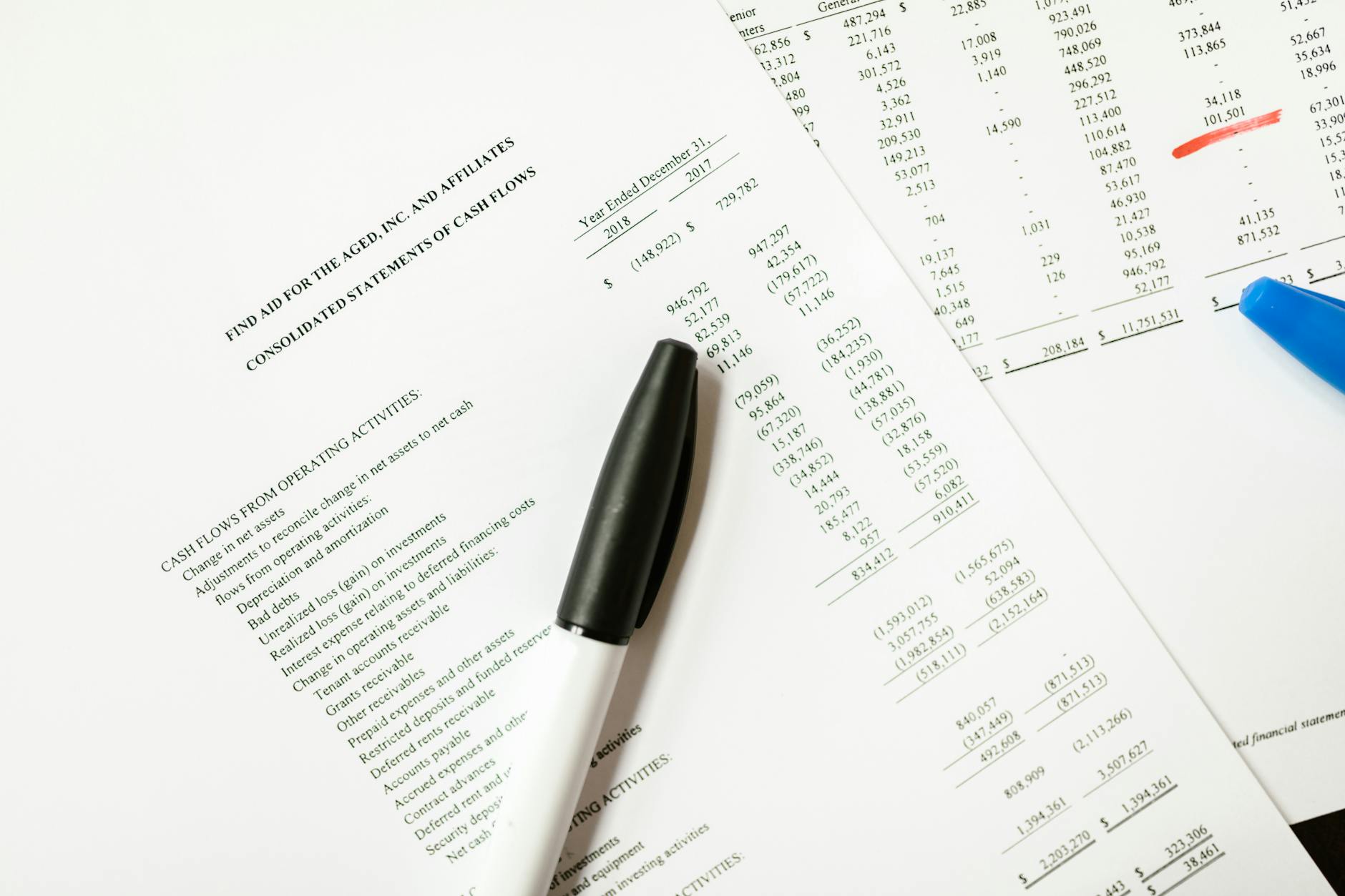
Think of the Balance Sheet as a photograph of your business’s financial health at a specific point in time—for example, on 31st December 2023. It answers three fundamental questions: What do you own? What do you owe? What is left over for the owners?
The core principle of a balance sheet is the accounting equation, which must always balance:
Assets = Liabilities + Owner’s Equity
Let’s break down each component with Kenyan context.
Assets: What Your Business Owns
Assets are resources with economic value that your business owns or controls, expected to provide a future benefit. They are categorized as either Current or Non-Current.
Current Assets: These are assets expected to be converted into cash within one year.
- Cash and Cash Equivalents: Money in your bank accounts (e.g., KCB, Equity) and mobile money float (e.g., M-Pesa Business Till).
- Inventory: Goods held for sale (e.g., spare parts in a hardware store in Industrial Area, finished garments in a clothing boutique in Nairobi CBD).
- Accounts Receivable (Debtors): Money owed to you by your customers for credit sales. (e.g., an invoice you sent to a corporate client that is due in 30 days).
- Prepaid Expenses: Payments made for future services (e.g., prepaid rent for your office in Westlands, prepaid insurance).
Non-Current Assets (Fixed Assets): These are long-term investments not intended for quick sale.
- Property, Plant & Equipment (PPE): Land, buildings, machinery, vehicles, office equipment (e.g., your company’s delivery truck, the land your factory sits on in Athi River, computers and printers).
- Intangible Assets: Non-physical assets like patents, trademarks, and software licenses.
Liabilities: What Your Business Owes
Liabilities represent your business’s obligations—debts that must be paid to other entities.
Current Liabilities: Debts due within one year.
- Accounts Payable (Creditors): Money you owe to your suppliers for credit purchases (e.g., unpaid bill from your supplier in China or from a local wholesaler).
- Short-Term Loans: Bank loans or shylock debts due within the year.
- Accrued Expenses: Incurred expenses not yet paid (e.g., unpaid employee salaries, accrued electricity bill from Kenya Power).
- KRA Tax Payable: Outstanding VAT, PAYE, or Corporation Tax that you have collected or accrued but not yet paid to the government.
Non-Current Liabilities: Long-term debts due after more than one year.
- Long-Term Loans: Mortgages or bank loans with a repayment period longer than one year (e.g., a 5-year loan from Co-operative Bank to purchase machinery).
Owner’s Equity: The Net Worth of Your Business

This is the owner’s claim on the business assets. It represents the amount of money that would be returned to shareholders if all assets were liquidated and all debts paid. It’s essentially the book value of the business.
- Capital: The initial and subsequent investments the owner(s) have put into the business.
- Retained Earnings: The cumulative net profits that have been reinvested into the business rather than paid out as dividends. This is the link between the Balance Sheet and the Income Statement.
Kenyan Example: Analyzing a Simplified Balance Sheet
Let’s look at “Joe’s Hardware Ltd.” based in Nakuru as of 31st Dec 2023:
Assets
- Current Assets: Cash (KSh 500,000), Inventory (KSh 1,500,000), Debtors (KSh 800,000)
- Non-Current Assets: Delivery Van (KSh 2,200,000), Store Equipment (KSh 500,000)
- Total Assets = KSh 5,500,000
Liabilities
- Current Liabilities: Creditors (KSh 700,000), KRA Payable (KSh 300,000)
- Non-Current Liabilities: Bank Loan (KSh 1,500,000)
- Total Liabilities = KSh 2,500,000
Owner’s Equity
- Capital: KSh 2,000,000
- Retained Earnings: KSh 1,000,000
- Total Equity = KSh 3,000,000
Check: Assets (KSh 5.5M) = Liabilities (KSh 2.5M) + Equity (KSh 3.0M). It balances!
This snapshot tells us Joe’s business has a net worth (equity) of KSh 3 million. It has KSh 2.8M in current assets to cover KSh 1M in current liabilities, suggesting a healthy short-term position.
Chapter 3: The Income Statement (Profit & Loss Statement) – The Movie of Your Profitability
If the Balance Sheet is a snapshot, the Income Statement is a movie. It shows your financial performance—revenues, expenses, and profits or losses—over a period of time, such as a month, quarter, or year. It answers the most fundamental question: Is my business making money?
Revenue: The Top Line
This is the total amount of money generated from your primary business activities, such as selling goods or providing services. It is often called the “top line.”
- Gross Revenue/Sales: The total invoice value of all sales before any deductions.
- Net Revenue/Sales: Gross sales minus sales returns and allowances. This is the figure you should primarily focus on.
Cost of Goods Sold (COGS): The Direct Cost of Sales
These are the direct costs attributable to the production or purchase of the goods sold by your company. For a service business, this may be called Cost of Sales.
- For a Retailer: The purchase cost of the inventory you sold.
- For a Manufacturer: Direct materials, direct labour, and manufacturing overheads.
- For a Service Company: The direct cost of labour for the employees delivering the service (e.g., consultants’ salaries).
Gross Profit = Revenue – Cost of Goods Sold
Gross profit shows the efficiency of your core business activity before accounting for overheads. A declining gross profit margin could indicate rising supplier costs or pricing pressure.
Operating Expenses: The Cost of Running the Business
These are the expenses incurred in the day-to-day running of the business that are not directly tied to production.
- Selling & Distribution: Marketing costs, sales commissions, delivery expenses.
- Administrative Expenses: Rent, salaries for admin staff, utilities, office supplies, depreciation.
- Other Expenses: Bank charges, mobile money transaction costs, etc.
Operating Profit (EBIT) = Gross Profit – Operating Expenses
This measures the profit generated from your core operations. It is a key indicator of operational efficiency.
Net Profit: The Bottom Line
This is the final measure of profitability. It is calculated by taking Operating Profit and then adding non-operating income (e.g., interest income) and subtracting non-operating expenses (e.g., interest expense on loans, corporation tax).
Net Profit (or Loss) = Operating Profit ± Non-Operating Items – Tax
This is the famous “bottom line.” It is the amount that gets added to (or subtracted from) Retained Earnings on your Balance Sheet.
Kenyan Example: Analyzing a Simplified Income Statement
Joe’s Hardware Ltd. Income Statement for the year ended 31st Dec 2023
- Net Sales: KSh 10,000,000
- Less: Cost of Goods Sold (COGS): (KSh 6,000,000)
- Gross Profit: KSh 4,000,000 (A healthy 40% gross margin)
- Less: Operating Expenses:
- Salaries & Wages: KSh 1,200,000
- Rent: KSh 600,000
- Marketing & Advertising: KSh 300,000
- Utilities & Other: KSh 400,000
- Total Operating Expenses: (KSh 2,500,000)
- Operating Profit: KSh 1,500,000
- Less: Interest Expense (on bank loan): (KSh 200,000)
- Profit Before Tax: KSh 1,300,000
- Less: Corporation Tax (@30%): (KSh 390,000)
- Net Profit for the Year: KSh 910,000
This statement tells us that Joe’s business is profitable. It generated KSh 910,000 after all expenses and taxes. This profit will be added to Retained Earnings on the Balance Sheet.
Chapter 4: The Cash Flow Statement – Tracking the Lifeblood of Your Business
Profit does not equal cash. A business can be profitable on the Income Statement but still run out of cash and fail. The Cash Flow Statement tracks the actual movement of cash in and out of your business over a period. It is categorized into three activities.
1. Cash Flow from Operating Activities
This is the most important section, as it shows the cash generated from your core business operations. It starts with Net Profit and then adjusts for non-cash items (like depreciation) and changes in working capital (changes in inventory, debtors, and creditors).
- Positive Operating Cash Flow means your core business is generating cash, which is a sign of health.
- Negative Operating Cash Flow is a major red flag, indicating you’re relying on loans or investments to fund your day-to-day operations.
2. Cash Flow from Investing Activities
This section records cash used for or generated from investments in long-term assets.
- Cash Outflow: Purchase of property, equipment, or other businesses.
- Cash Inflow: Sale of old equipment or an investment.
3. Cash Flow from Financing Activities
This shows cash movements between the business and its owners and creditors.
- Cash Inflow: Proceeds from a bank loan, injection of owner’s capital.
- Cash Outflow: Repayment of loan principal, dividends paid to owners.
The net change in cash from these three sections explains the difference in your cash balance between the start and end of the period.
Kenyan Context: The M-Pesa Effect
For Kenyan businesses, tracking cash flow is paramount, especially with the prevalence of mobile money. You must reconcile all M-Pesa transactions, bank transfers, and physical cash movements to get a true picture. A sudden spike in accounts receivable (debtors) might look like growth on the Income Statement, but if those customers are slow to pay, your M-Pesa balance will suffer, creating a cash crunch.
Chapter 5: How to Analyze Your Statements: From Numbers to Knowledge
Reading the statements is step one. The real power comes from analysis—using ratios and trends to extract meaningful insights.
Key Financial Ratios for Kenyan SMEs
- Profitability Ratios:
- Gross Profit Margin: (Gross Profit / Revenue) x 100. Measures production efficiency. Joe’s is 40%.
- Net Profit Margin: (Net Profit / Revenue) x 100. Measures overall profitability. Joe’s is 9.1%.
- Return on Equity (ROE): (Net Profit / Owner’s Equity) x 100. Measures how effectively you are generating returns on the owners’ investment. Joe’s ROE is (910,000 / 3,000,000) x 100 = 30.3%, which is excellent.
- Liquidity Ratios:
- Current Ratio: Current Assets / Current Liabilities. Measures short-term solvency. A ratio above 1.5 is generally healthy. Joe’s is (2.8M / 1M) = 2.8.
- Quick Ratio: (Current Assets – Inventory) / Current Liabilities. A more stringent test of liquidity. Joe’s is (1.3M / 1M) = 1.3.
- Leverage Ratios:
- Debt-to-Equity Ratio: Total Liabilities / Owner’s Equity. Measures financial risk and reliance on debt. Joe’s is (2.5M / 3.0M) = 0.83, meaning he uses 83 cents of debt for every shilling of equity, which is moderate.
- Efficiency Ratios:
- Inventory Turnover: COGS / Average Inventory. Measures how quickly you sell inventory. A higher number is better.
- Debtor Days: (Accounts Receivable / Revenue) x 365. Measures the average number of days it takes to collect payment. You want this number to be as low as possible.
Trend Analysis: Looking at the Big Picture
Don’t just look at one period. Compare your statements over time (month-over-month, year-over-year). Are margins improving? Is debt growing faster than equity? Is cash flow from operations consistently positive? Trends are more revealing than a single data point.
Chapter 6: Common Pitfalls and How to Avoid Them in the Kenyan Context
- Mixing Personal and Business Finances: This is the cardinal sin of small business owners. It makes bookkeeping a nightmare and exposes your personal assets to business risks. Solution: Open a dedicated business bank account and M-Pesa Business Till.
- Ignoring the Cash Flow Statement: Focusing solely on profit can lead to a cash crisis. Solution: Review your cash flow statement monthly with your accountant.
- Poor Debtor Management: Letting customers delay payments indefinitely cripples your cash flow. Solution: Implement clear credit policies, send invoices promptly, and follow up diligently.
- DIY Accounting with No Expertise: Using untrained staff or trying to manage complex books yourself leads to errors, missed KRA deadlines, and penalties. Solution: Partner with a qualified Kenyan accounting firm like JOSMA Consultants. The cost is an investment that saves you money and stress.
Conclusion: Empower Your Business with Financial Clarity
Understanding your financial statements is not about becoming a certified accountant. It’s about becoming a more empowered, strategic, and successful business owner. These documents hold the key to diagnosing problems, identifying opportunities, and making decisions with confidence.
You don’t have to navigate this alone. The team at JOSMA Consultants specializes in helping Kenyan businesses like yours not only prepare accurate, compliant financial statements but also understand and use them to drive growth and profitability.
Ready to transform your financial data into a strategic advantage?
Contact JOSMA Consultants Today for a consultation. We offer:
- Bookkeeping and Financial Statement Preparation
- Financial Analysis and Business Advisory Services
- KRA Tax Compliance and Planning
- Software Setup and Training (QuickBooks Online, Xero)
Let us help you build a clearer, stronger, and more profitable business.
Follow Us on Social Media for more practical tips on managing your business finances in Kenya
No responses yet